


Are you trying to choose between Liquid Web and Hostinger for your website hosting needs? It can be tricky to decide with so many options available, but both of these hosting providers offer strong features.
Liquid Web is known for its premium, high-performance hosting with excellent customer support, making it ideal for businesses or larger websites.
On the other hand, Hostinger is a more budget-friendly choice without sacrificing speed or reliability.
Whether you’re just starting out or scaling up, the right host depends on your priorities—performance, price, or support. Let’s dive into the details to help you make the ultimate choice!
Liquidweb
Liquid Web is a managed hosting provider offering high-performance cloud hosting, dedicated servers, VPS hosting, and managed WordPress and WooCommerce solutions.
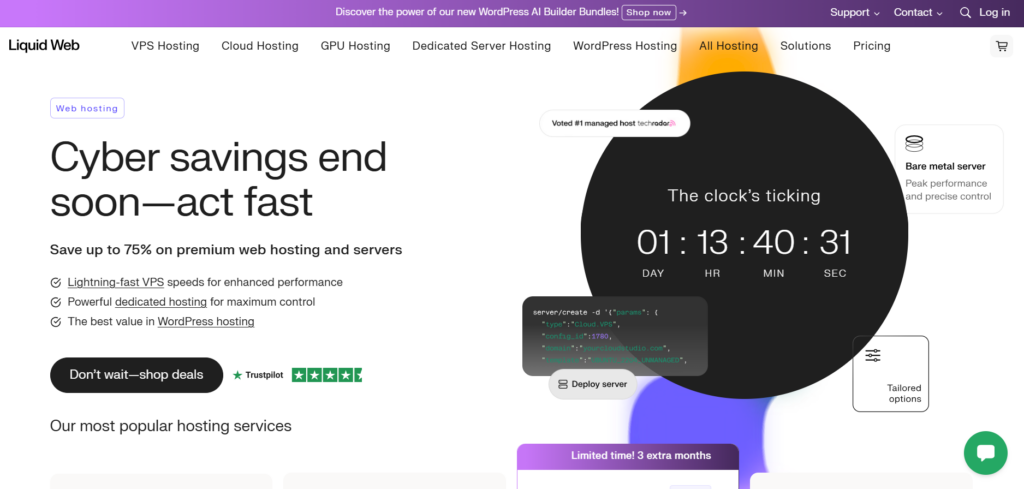
Catering to businesses of all sizes, Liquid Web is known for its robust infrastructure, exceptional customer support, and 99.999% uptime guarantee.
Its services are designed for mission-critical websites and applications, providing scalable solutions with advanced security and customization.
Liquid Web prioritizes reliability and performance, making it a trusted choice for developers, agencies, and enterprises seeking powerful hosting solutions.
[button-red url=”https://digitalmarketerr.com/recommends/liquid-web/” target=”_blank” position=”center”]🔥Try Liquid-Web Now[/button-red]
Hostinger
Hostinger is a globally recognized web hosting provider known for its affordable and user-friendly services. Catering to beginners and professionals alike, it offers shared hosting, cloud hosting, VPS, and domain registration solutions.

With features like a custom control panel (hPanel), 24/7 customer support, and a 99.9% uptime guarantee, Hostinger ensures seamless website management. Its scalable plans, free SSL certificates, and a website builder make it ideal for small businesses, personal blogs, and e-commerce platforms.
With data centers worldwide, Hostinger delivers fast website loading times. It’s popular for its competitive pricing, robust performance, and commitment to empowering users to build an online presence.
[button-red url=”https://www.hostinger.com/” target=”_blank” position=”center”]🔥Try Hostinger Now[/button-red]
Features Comparison: Liquid Web vs Hostinger
Liquid Web and Hostinger are both reputable web hosting providers, each offering distinct features tailored to different user needs. Here’s a comparative overview:
1. Performance and Uptime:
- Liquid Web: Guarantees a 99.999% uptime, ensuring exceptional reliability for high-traffic websites.
- Hostinger: Offers a 99.9% uptime guarantee, which is standard in the industry.
2. Hosting Solutions:
- Liquid Web: Specializes in managed hosting services, including VPS, dedicated servers, and cloud hosting, catering to businesses with complex requirements.
- Hostinger: Provides a range of services such as shared hosting, VPS, and cloud hosting, focusing on affordability and user-friendliness.
3. Security Features:
- Liquid Web: Offers advanced security measures, including DDoS protection, integrated firewalls, and 24/7 monitoring, ensuring robust protection for client data.
- Hostinger: Provides standard security features like free SSL certificates and regular backups.
4. Customer Support:
- Liquid Web: Known for its “Heroic Support,” offering 24/7 assistance via phone, chat, and email, with quick response times.
- Hostinger: Provides 24/7 customer support through live chat and a comprehensive knowledge base.
Why Liquid Web Might Be the Better Choice?
For businesses requiring high performance, exceptional uptime, advanced security, and comprehensive managed services, Liquid Web stands out as a superior option.
Its premium offerings are tailored for mission-critical websites that cannot afford downtime or security breaches.
While Hostinger is cost-effective and suitable for smaller projects, Liquid Web provides the robust infrastructure and support necessary for larger enterprises and high-traffic websites.
In summary, if your priority is top-tier performance, security, and support, and you’re willing to invest in premium services, Liquid Web is the preferable choice.
However, for more budget-conscious projects with less demanding requirements, Hostinger remains a viable option.
Pricing Comparison: Liquid Web vs Hostinger
Liquid Web and Hostinger cater to different segments of the hosting market, each offering distinct pricing structures and services. Here’s a comparative overview:
Liquid Web Pricing:
1. Managed WordPress Hosting:
- Spark Plan: Starts at $15/month.
- Maker Plan: Priced at $59/month.
- Designer Plan: Available at $99/month.
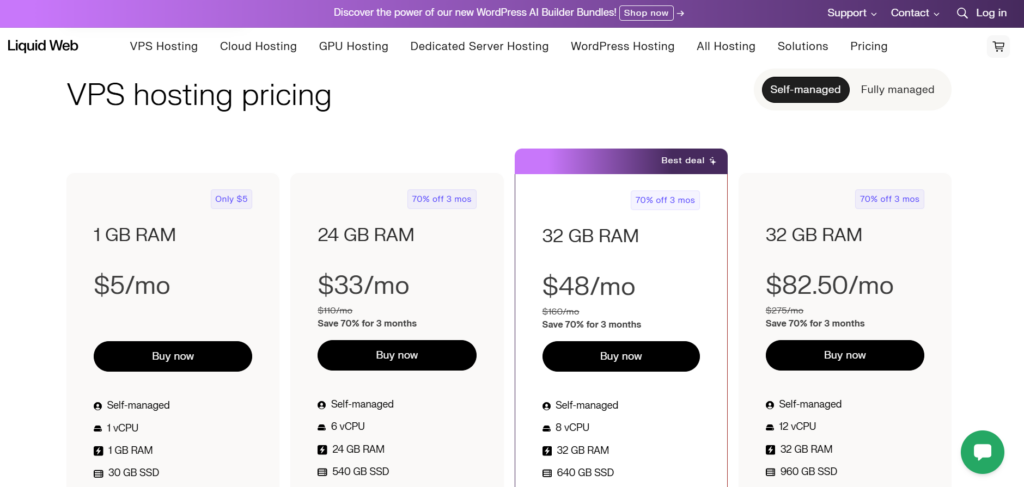
2. VPS Hosting:
- 2 GB RAM: Starts at $59/month.
- 4 GB RAM: Priced at $99/month.
- 8 GB RAM: Available at $139/month.
Liquid Web positions itself as a premium hosting provider, offering high-performance managed hosting solutions tailored for businesses, e-commerce sites, and agencies that require robust and scalable services.
[button-red url=”https://digitalmarketerr.com/recommends/liquid-web/” target=”_blank” position=”center”]🔥Try Liquid-Web Now[/button-red]
Hostinger Pricing:
1. Shared Hosting:
- Single Plan: Starts at $1.99/month.
- Premium Plan: Begins at $2.99/month.
- Business Plan: Priced at $4.99/month.
2. VPS Hosting:
- VPS 1: Starts at $3.49/month.
- VPS 2: Priced at $4.99/month.
- VPS 3: Available at $7.99/month.
Hostinger is recognized for its budget-friendly plans, making it a popular choice for individuals, bloggers, and small businesses seeking affordable hosting solutions.
[button-red url=”https://www.hostinger.com/” target=”_blank” position=”center”]🔥Try Hostinger Now[/button-red]
Why Liquid Web Might Be the Better Choice:
While Hostinger provides cost-effective plans suitable for smaller projects, Liquid Web offers several advantages for businesses with more demanding requirements:
- Performance and Reliability: Liquid Web guarantees a 99.999% uptime, ensuring exceptional reliability for high-traffic websites.
- Advanced Security: Liquid Web provides advanced security measures, including DDoS protection, integrated firewalls, and 24/7 monitoring, offering robust protection for client data.
- Superior Support: Known for its “Heroic Support,” Liquid Web offers 24/7 assistance via phone, chat, and email, with quick response times and expert assistance.
In summary, if your priority is top-tier performance, security, and support, and you’re willing to invest in premium services, Liquid Web is the preferable choice.
However, for more budget-conscious projects with less demanding requirements, Hostinger remains a viable option.
Conclusion: Liquid Web vs Hostinger
Liquid Web surpasses Hostinger with its premium managed hosting solutions, offering exceptional performance, reliability, and top-notch customer support.
Liquid Web specializes in high-performance servers, enhanced security, and tailored services for businesses with complex hosting needs.
While Hostinger offers affordable plans, it lacks the same level of scalability and hands-on support.
Liquid Web’s robust infrastructure, reliable uptime, and personalized customer service make it the clear winner for those seeking top-tier hosting solutions and long-term business growth.
[button-red url=”https://digitalmarketerr.com/recommends/liquid-web/” target=”_blank” position=”center”]🔥Try Liquid-Web Now[/button-red]
FAQ’s
Who offers better uptime?
Liquid Web guarantees 99.999% uptime, compared to Hostinger’s 99.9%.
Who provides better performance?
Liquid Web excels in performance, catering to high-traffic websites.
Which has stronger security features?
Liquid Web offers advanced security like DDoS protection, surpassing Hostinger’s standard features.
Who provides better customer support?
Liquid Web is renowned for its “Heroic Support,” while Hostinger offers 24/7 live chat.
Which is more scalable?
Liquid Web is ideal for businesses with complex needs, while Hostinger suits small to medium projects.